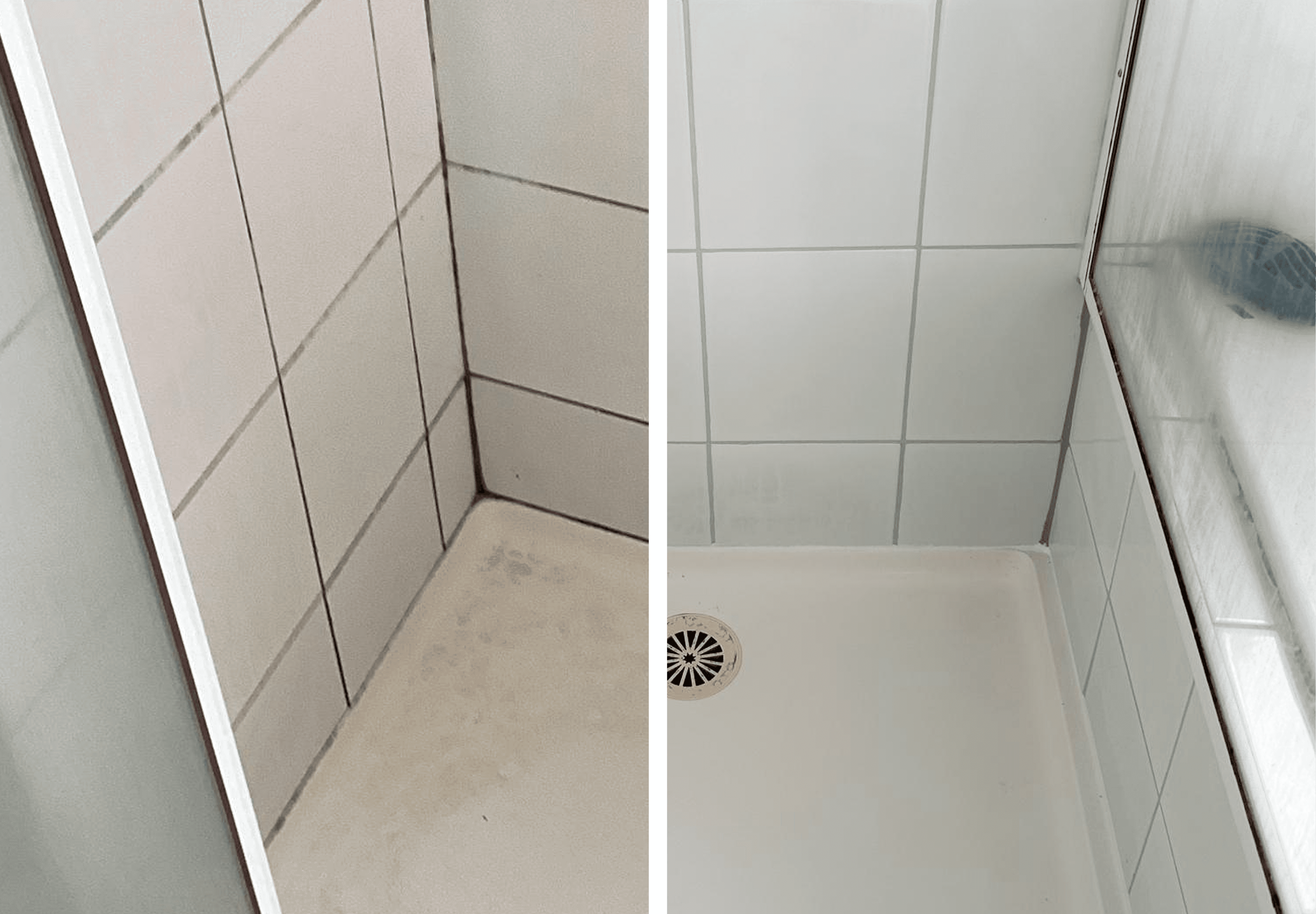
10 Signs Your Shower Needs Regrouting and When to Call a Professional
By
Rob Green
5 min
read


Here is something most homeowners never get told. The grout between your tiles was never waterproof.
Cement grout is porous by design. It soaks up water and holds onto it, then gives way slowly over years. The barrier genuinely keeping water out of your walls is a membrane sitting behind and beneath the tiles.
Grout is the first line of defence. Once it goes, water pools in the cavity between the tiles and that membrane. Catch shower grout problems at that stage and you have a single day repair. Miss them, and the number grows.
Why Does Shower Grout Fail in the First Place?
Three things wear it down. Constant wetting and drying, movement in the building, and cleaning products stronger than the grout itself.
Every shower puts the grout through a soak and dry cycle, and cement expands slightly each time. Houses shift with the seasons too, opening hairline cracks along tile edges. Bleach and acidic cleaners then eat at the surface a little more each week. None of it happens quickly, so shower grout failure is usually well advanced before anyone notices.
What Are the 10 Signs Your Shower Needs Regrouting?
Go through this list standing in your own shower. Ticking any of these shower grout problems means water is reaching somewhere it should stay out of.
# | What you see | What it means | Act by |
1 | Grout crumbles when scratched | Cement has broken down and lost its seal | Soon |
2 | Cracks along grout lines | Movement has opened a direct water path | Soon |
3 | Mould returns days after cleaning | Moisture is feeding it from inside the grout | Soon |
4 | Missing sections between tiles | Water is running straight past the barrier | Now |
5 | Dark or permanently wet-looking lines | Grout is saturated and staying that way | Now |
6 | White, salty build-up on the lines | Efflorescence, meaning water is moving through | Now |
7 | Loose, drummy or spongy tiles | Water has reached the adhesive layer | Now |
8 | Bubbling paint or swollen skirting nearby | Moisture has left the shower entirely | Urgent |
9 | A musty smell that cleaning never fixes | Damp is sitting inside the wall cavity | Urgent |
10 | A leak with no plumbing source | Water is tracking under the tiles | Urgent |
Numbers six, seven and ten get misread more than the rest.
Efflorescence is that white crystalline residue on the grout lines. Water passing through cement leaves mineral deposits behind as it evaporates, so scrubbing removes the evidence while the movement underneath carries on. It returns within weeks. People blame soap scum.
Drummy tiles are the ones that sound hollow when you tap them, and most homeowners never think to tap. A hollow note tells you the adhesive bond has softened, and softened adhesive means water reached a layer it should never have touched.
Then there is a leak nobody can find, the clearest signal on the list. Your plumber checks the pipework and finds it sound. The water is passing through failed grout, running along the membrane, then surfacing in a room nowhere near the shower.
Which Signs Mean You Should Call Someone Today?
Anything showing outside the shower itself.
Bubbling paint. Swollen skirting boards. Floorboards lifting in the next room, or a musty smell in the hallway. Each one tells you the water has already left the wet area, and at that point shower grout damage has become building damage. Every week of delay widens the affected zone.
Cosmetic shower grout issues buy you more time. Surface staining, patchy colour and slight roughness are worth addressing before they progress, though they rarely need same-week attention.
Hold onto one distinction. Discolouration is a grout problem. Anything wet beyond the shower is a structure problem.
Can You Regrout a Shower Yourself?
You can, and it works when the shower grout failure is genuinely superficial.
Most people make the same mistake, which is skimming fresh grout over the old. That traps moisture underneath and buys a few months of looking fine.
Done properly, regrouting means cutting out the old grout completely and letting the cavity dry out fully before sealing it. What you refill it with also matters. Standard cement grout is porous, so if you replace old cement with new cement, you're likely to face the same problem again before long.
Epoxy behaves differently. This two-part resin bonds to the tile edge and sets into a hard, seamless, waterproof seal. It's more durable, but it's also trickier to apply and takes some skill to get right.
There are situations where DIY simply isn't the right call:
Loose tiles — these need professional attention
Moisture outside the shower — this points to structural damage
A repair that's already failed once — something deeper is going on
The biggest risk with any DIY regrout is sealing over a cavity that isn't fully dry. Trap moisture behind a fresh seal and you'll end up with a worse problem than the one you started with.
Getting It Sorted
Shower grout problems announce themselves well before the grout fails completely, and that window is when regrouting still solves everything.
Save 'n' Seal are Melbourne regrouting specialists. The old cement comes out at full depth, the trapped moisture gets vacuumed from the cavity, and the area is resealed with waterproof epoxy. Your tiles stay where they are.
The work carries a 10 year warranty, and the business holds a 4.9 rating across more than 200 reviews. Send through photos for a quick quote or call 1300 479 200 for a straight answer on whether regrouting fixes it.

Rob Green
Re-grouting expert
Expert at The Grout Guy, Rob built the business from the ground up and brings decades of hands-on experience, balancing leadership with a passion for family, motorsport and doing the job properly.