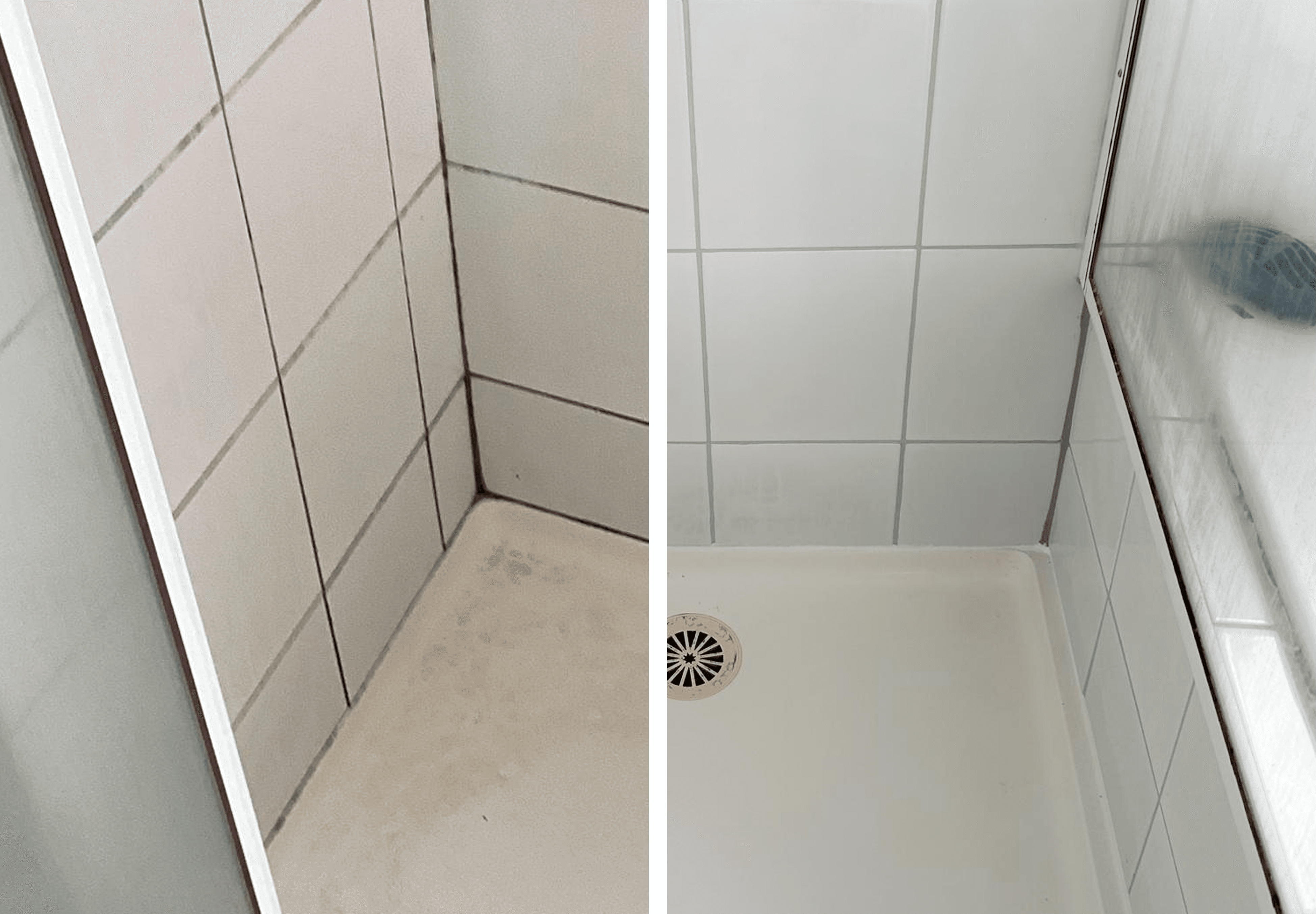
Is Your Grout Actually Waterproof? What Epoxy Tile Grout Fixes That Cement Can't
By
Rob Green
8 Mn
read


Cement grout is porous. Seal it as often as you like; water still gets in eventually. Epoxy is non porous, 100% waterproof, no gaps for water to find, which is the whole reason it shrugs off mold and staining where cement can't.
Most homeowners couldn't tell you what their grout is even made of, and there's no reason they should. But the grout in your shower almost certainly isn't waterproof, and it never has been.
Cement grout sits between the tiles doing an important job. Badly. Water soaks straight through it.
So why does this happen? How do you know if yours has already failed? And what does waterproof epoxy grout actually change? That's what this guide covers.
Why Cement Grout Lets Water Through
It's basically cement, sand, and water mixed together and left to cure, which leaves behind a surface full of microscopic pores.
Water finds those pores fast.
Australian wet areas are meant to be waterproofed under AS 3740, an australian standard covering the membrane beneath your tiles. Grout isn't part of that membrane, though. It's just the joint between the tiles. It was never engineered to be watertight on its own. Newly applied cement grout buys you a year or two of daily showers. Maybe less. Then it wears thin, water works through the grout, and pools against the membrane below, hunting for a gap.
Signs Your Grout Has Already Given Up
Some of these you'll spot straight away. Others creep up slowly.
Grout that crumbles when you scratch it
Mold back within weeks of a clean
White, salty build-up along the joints
Paint bubbling or discolouring on a nearby wall
Tiles that feel spongy, loose, or slightly lifted
A leak your plumber can't trace to a pipe
Spotting more than one of these means it's worth getting checked soon. Water that gets past a failed grout doesn't evaporate. It just sits there in the substrate, quietly turning a grout problem into a much bigger issue.
What Waterproof Epoxy Grout Actually Is
Resin and a hardener. Not cement, not sand. That's the entire difference, and it changes everything downstream.
Once cured you're left with a dense, closed surface. No pores, no path for water to enter. No sealing required either. It won't stain the way cement does, and because there's nowhere damp mold to settle, it cant a foothold in wet areas that would otherwise breed it.
Feature | Cement Grout | Waterproof Epoxy Grout |
Water Resistance | Porous and can absorb moisture if left unsealed | Non-porous and highly resistant to water |
Sealing Required | Yes. Requires sealing after installation and periodic resealing | No. Does not require sealing |
Stain Resistance | More likely to absorb stains, dirt and spills | Highly resistant to stains and easy to clean |
Mould & Mildew Resistance | More susceptible in damp environments if not maintained | Better resistance to mould and mildew due to its non-porous surface |
Durability | Suitable for standard residential use but can crack or wear over time | Highly durable and resistant to cracking, chemicals and heavy traffic |
Typical Lifespan | Generally, under 10 years with proper maintenance | Can last 20 years or more when correctly installed and maintained |
Maintenance | Regular cleaning and resealing required | Low maintenance with no resealing needed |
Chemical Resistance | Limited resistance to harsh chemicals | Excellent resistance to chemicals, acids and cleaning products |
Best Applications | Dry indoor areas with light to moderate use | Wet areas, commercial spaces, kitchens, bathrooms, pools and high-traffic areas |
Installation | Easier to apply and more forgiving for installers | More complex to install and requires experienced application |
Upfront Cost | Lower material and installation cost | Higher initial cost due to material and installation expertise |
Long-Term Value | Lower initial investment but may require more maintenance and repairs | Higher upfront investment with lower maintenance costs over its lifespan |
Epoxy costs more to buy and more to install properly, since it sets fast, and a slow or careless application shows immediately. Somewhere like a shower or a balcony, where water shows up daily whether you like it or not, that extra cost tends to work itself out over time. You're not paying to reseal it every year, and you're not paying to fix the damage cement grout would have let through.
A kitchen splash back that barely gets wet? Different story. Cement will do the job fine for years. Paying extra doesn't really stack up.
Where Epoxy Earns Its Keep
Shower regrouting is the obvious call, because showers see moisture every single day, and cement grout fails faster there than almost anywhere else in the house. The same goes for bathroom regrouting generally: floors, splash backs, the areas around baths and basins are all high moisture areas that need to be watertight.
Balconies deserve their own mention, Balcony regrouting with epoxy matters because these tiles cop weather on top of everyday use. Water slips under an exterior tile, reaches the timber framing underneath, and you've got a much bigger problem than grout. Seal that entry point and it stops before it starts.
Prep Work Matters Just as Much as the Product
Here's the catch: even the best waterproof epoxy grout only performs as well as what's underneath it. Old, failed cement grout has to come out completely. Any trapped water needs dealing with too, or the same issue just resurfaces under a fresh surface a year later.
If you're in Melbourne and not sure whether your grout's failed, Save ‘n’ Seal. offers assessments across the areas they service and can talk to you through whether epoxy tile grouting services in Melbourne makes sense for your situation.
FAQs
1.Can waterproof grout stop an existing shower leak?
Yes! Waterproof epoxy grout stops water from penetrating under the tiled surface, which stops the leak even if your membrane has failed, as the water never reaches the membrane.
2.Does the colour of the grout affect how well it performs?
No. Grout colour has no impact on its waterproofing or durability. Performance depends on the grout material itself. Whether you choose white, grey or another colour, an epoxy grout provides the same level of water and stain resistance.
3.Is epoxy grout suitable for natural stone tiles?
It can be, but not all natural stones are the same. Some porous stones require careful installation and need to be sealed independently of the grout. Always check the tile manufacturer’s recommendations before selecting grout.
4.Why does grout fail even when the tiles still look perfect?
Tiles are only visible on the surface. Grouts are exposed to moisture, movement, and cleaning products every day. It often deteriorates long before the tiles show any signs of damage, allowing water to reach the layers beneath.
5.Can hard water affect the lifespan of grouts?
Yes. Minerals found in hard water can leave deposits on grout joints over time. While these deposits can build on any surface, epoxy grout wont absorb minerals, making it easier to clean and maintain.
6.Is all epoxy grouts completely waterproof?
High-quality epoxy grout is non-porous and highly water-resistant once correctly installed and cured. However, waterproof performance also depends on proper preparation, correct application by a professional.
7.Does replacing grout mean replacing the tiles too?
No. If the tiles are in good condition and firmly bonded, old grout can often be removed and replaced without disturbing the existing tiles, making regrouting a more cost-effective solution than a full renovation.
8.How long should you wait before using a shower after epoxy regrouting?
The curing time varies depending on the product and environmental conditions, but many epoxy grouts require at least 36 hours before light use. Always follow the manufacturer’s curing recommendations or your installer’s advice.
9.Will switching to epoxy grout change the appearance of my tiled area?
The overall look of your tiles remains the same, but a new epoxy grout can make tiled surfaces appear cleaner and more uniform. It also retains its colour better over time because it is less likely to absorb stains and moisture.
10.Does epoxy grout a good option for older homes?
Yes, provided the existing tiles and substrate are structurally sound. Many homeowners choose epoxy grouts during bathroom or balcony regrouting projects to improve moisture resistance without replacing the entire tiled surface. An assessment can determine whether the existing installation is suitable.

Rob Green
Re-grouting expert
Expert at The Grout Guy, Rob built the business from the ground up and brings decades of hands-on experience, balancing leadership with a passion for family, motorsport and doing the job properly.